
Criminal Cases in the Ontonagon County Courts
Ontonagon County criminal court cases begin in the 98th District Court. That court hears misdemeanors and handles a felony complaint through arraignment, the probable-cause conference, and the preliminary examination. If probable cause is found or the examination is waived, a bindover sends the felony to the 32nd Circuit Court. The Circuit Court then keeps the information, later motions, plea or trial record, judgment, sentence, and post-judgment filings. Both courts sit on the second floor of the Ontonagon County Courthouse, but their files and phone lines remain distinct.
The County Clerk is the custodian for Circuit Court records. Filed public papers stay with the clerk, even though the prosecuting attorney prepares or approves the charging documents. District Court keeps its own docket for misdemeanors and a felony’s opening phase. Ontonagon County does not have a municipal criminal court. It also does not advertise a separate county case portal. Those facts make the court level and case number vital search clues.
Ontonagon County Felony Records Start
The 98th District Court is the first stop for an Ontonagon County felony record. Its official page lists the court at 725 Greenland Road, on the courthouse’s second floor, and gives 906-884-2865 as the common court number. A caller can ask whether a name has a misdemeanor case, a felony complaint, an arraignment, a bond order, or a scheduled preliminary event. Providing the full legal name, date of birth, and a rough filing year helps the clerk distinguish people and locate older files.
The official 98th District Court page shows the local court contact and personnel.
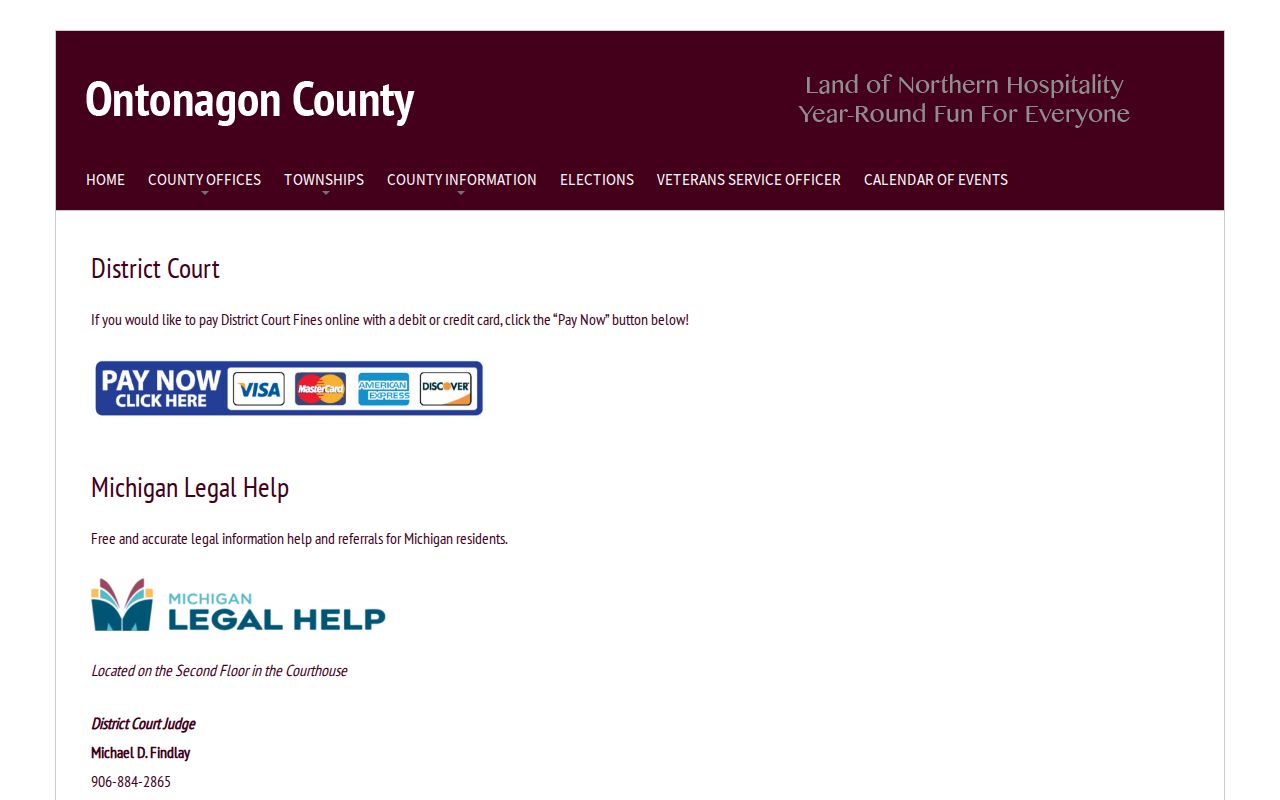
This court is where the public trail for a local felony ordinarily opens before any bindover to Circuit Court.
How to Search Case Records
Start with Michigan’s court case-search gateway, which routes users to MiCOURT Case Search for participating courts. Coverage and available data depend on the court. Ontonagon County’s own pages do not promise public online access, so an empty result is a prompt to call the clerk, not proof that no file exists. Use this five-part search path:
- Choose the 98th District Court for a misdemeanor or the opening phase of a felony. Choose the 32nd Circuit Court for a felony after bindover.
- Search by an exact case number when known. Otherwise use the person’s full name and narrow the search by year or other available filters.
- Open the case summary and check the court, filing year, status, charges, judge, and next hearing before treating it as the right match.
- Read the register of actions to follow filings and court events. Confirm unclear labels or an attempted-offense marker with the clerk.
- Ask the court of record for the complaint, information, plea, dismissal, or judgment needed. Confirm current plain-copy and certification costs before ordering.
MiCOURT documents a broad set of filters, though the public controls and local coverage can vary:
| Field Label | Type | Required | Notes |
|---|---|---|---|
| Court | Selection | Yes | Pick a participating court; coverage is court-specific. |
| Case Number | Text | Alternative | The exact local number is the strongest locator. |
| First and Last Name | Text | Name search | Spelling and full names help reduce false matches. |
| Case Category | Filter | No | Criminal, non-traffic, traffic, and other choices vary. |
| Case Year and Status | Filter | No | Status options can include open, closed, deferred, or disposed. |
| Judge or DOB | Filter | No | Availability and public handling depend on the court. |
Ontonagon County MiCOURT Search Limits
MiCOURT is useful, but it is not one complete statewide trial-court index. The terms stress that the court of record remains authoritative. Some participating courts apply a seven-year criminal-sentence filter. Protected matters do not appear. If Ontonagon County is missing from the current court list, or if an old case does not return, call the local clerk and ask for a name and year search. A register of actions is often the best first item because it identifies the events and documents worth ordering.
The portal also posts a specific caution about attempts under MCL 750.92. An attempted charge can display as “FELONY” even when subsection (3) may make the attempt of a less-than-five-year felony a misdemeanor. The letter “A” can mark an attempt, conspiracy, or solicitation. Read the filed statute and judgment instead of relying on that one portal label.
The official MiCOURT case-search gateway explains the participating-court path and its coverage limits.
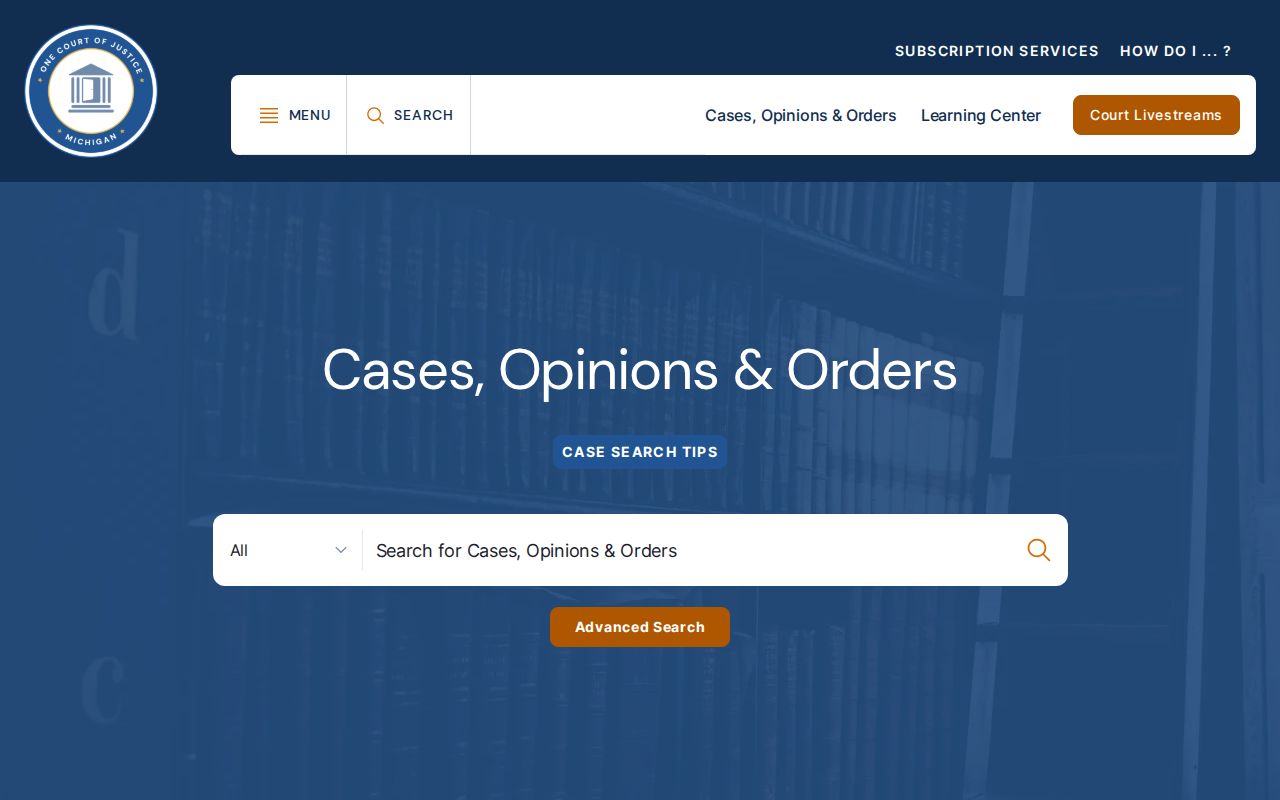
The gateway is a sound first check, while a direct clerk request closes local coverage gaps and confirms the legal record.
What the Case File Shows
An Ontonagon County criminal case file centers on filed judicial action, not merely the reason for an arrest. MiCOURT documentation supports a public schema with the docket or tracking ID, case category, year, status, judge, participants, charges, next hearing, and financial entries. The paper or electronic clerk file can add the complaint, information after bindover, motions, plea documents, dismissal orders, and judgment of sentence. Public access depends on the case and document.
| Case Number & Court | Identifies the exact District or Circuit file and prevents two phases of one felony from being confused. |
|---|---|
| Charging Document | The complaint begins the case; an information states felony charges in Circuit Court after bindover. |
| Docket Entries | The register of actions lists filings, hearings, orders, pleas, and other court events in date order. |
| Hearing Dates | Shows past events and a next hearing where public display and scheduling allow. |
| Disposition & Judgment | Records a conviction, dismissal, acquittal, or other charge-level result. |
| Sentence & Conditions | States the court’s sentence, financial entries, and publicly available terms or later orders. |
Ask for a certified judgment when formal proof of the disposition is needed. A screen image or state summary is not a clerk’s certification.
Two Ontonagon County Case Numbers
A single felony can create records in both local courts. The District Court number follows the complaint, arraignment, bond, probable-cause conference, and preliminary examination. After bindover, the Circuit Court opens its own file for the information, pretrial work, plea or trial, and sentence. A person who searches only one number may see an unfinished story or miss the final disposition entirely.
The official 32nd Circuit Court page identifies the felony-level court and its clerk contact.
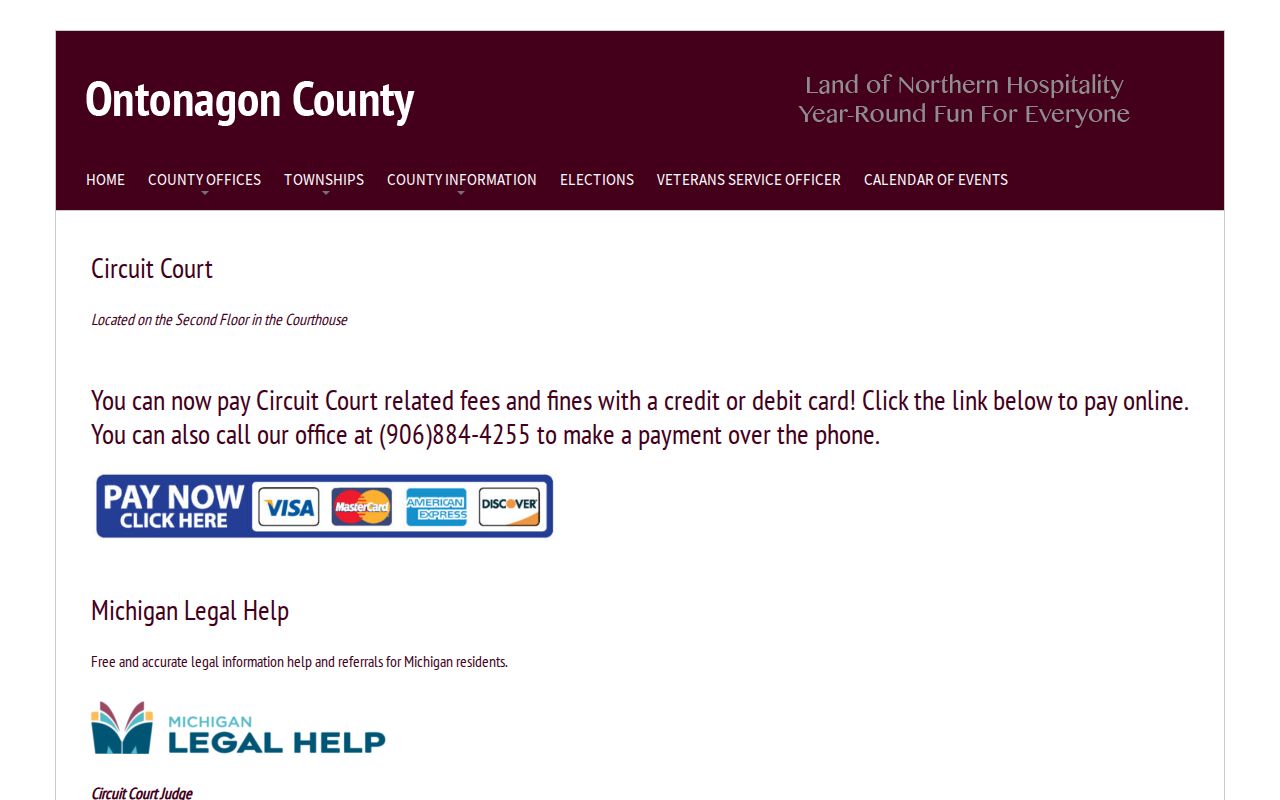
When a District docket says “bound over,” use that event and the person’s details to ask Circuit Court for the continuing file.
Note: District and Circuit entries can describe connected phases of one prosecution, so keep both court numbers with any copies.
Stages of a Criminal Case
Ontonagon County procedure depends on the charge level. A misdemeanor generally remains in District Court through resolution and sentence. A felony begins there but can move to Circuit Court after waiver or a probable-cause finding. Motions and plea talks may change the filed counts. Trial can end in conviction or acquittal, while dismissal can end a count without conviction. The judgment of sentence gives the final trial-court result after a conviction.
Case flow: Charges Filed › Arraignment › Pretrial › Plea or Trial › Disposition › Sentencing
An official 2026 MSP account illustrates this local path without requiring any private person’s identity: arraignment occurred in the 98th District Court, the bound-over felony reached a jury in the 32nd Circuit Court, and Circuit Court later imposed sentence. The example shows why both dockets matter when tracing an Ontonagon County felony from start to finish.
Ontonagon County Charges and Clerk Files
The Ontonagon County Prosecuting Attorney decides which local charges to file and litigates the case. Michigan uses the title “Prosecuting Attorney,” not district attorney. Yet the prosecutor’s working file is not a substitute for the public court docket. Once a complaint, information, motion, or order is filed, the court clerk is the proper public-record contact. Requests for filed case papers should therefore go to District or Circuit Court, not to a general request for the prosecutor’s litigation material.
The official county prosecutor page confirms the office’s courthouse role and contact.
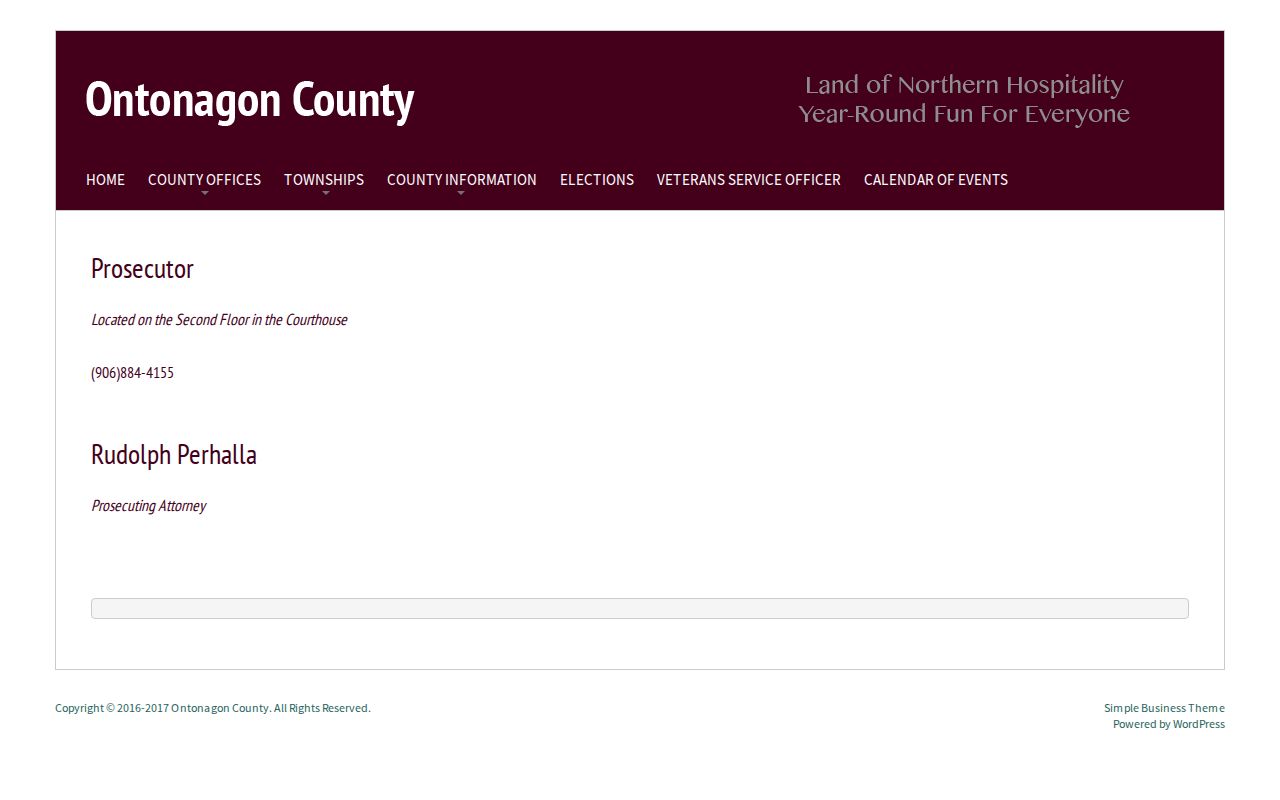
The image helps locate the charging office, while the clerk remains the source for the filed public case record and judgment.
Access & Restrictions
Michigan Court Rule 8.119 governs court records and access along with other laws and rules. Public access does not expose every case or every field. Juvenile and child-protective proceedings, adoption matters, personal protection matters, some mental-health records, and other protected categories are excluded from ordinary public display. Suppressed matters and sensitive identifiers also stay out of public results.
Online access can be narrower than the clerk’s public file, and the file itself can contain redactions. When a known Ontonagon County case does not appear, ask the court of record whether it is outside portal coverage, archived, suppressed, or indexed under another number. Do not use a Michigan FOIA request as a substitute for the clerk’s court-record procedure. FOIA is the proper route for many agency-created records, while court access follows the court rule and the clerk’s process.
Ontonagon County Clerk Record Requests
The courthouse is at 725 Greenland Road, Ontonagon, Michigan 49953, with published public hours of 8:30 a.m. to 4:30 p.m. The County Clerk is on the first floor and remains open through the noon hour. Both criminal courts are on the second floor. Call 906-884-2865 for the 98th District Court. For the 32nd Circuit Court and Circuit records, call the clerk at 906-884-4255. Current criminal-copy and certification charges are not posted on the county pages, so request a price before ordering.
Ontonagon County Criminal Courts
725 Greenland Road
Ontonagon, MI 49953
District: 906-884-2865
Circuit Clerk: 906-884-4255
Public hours: 8:30 a.m. to 4:30 p.m.
Ask for the register of actions first. It supplies a compact event list, helps distinguish District from Circuit activity, and reduces the chance of paying for papers that do not answer the question.